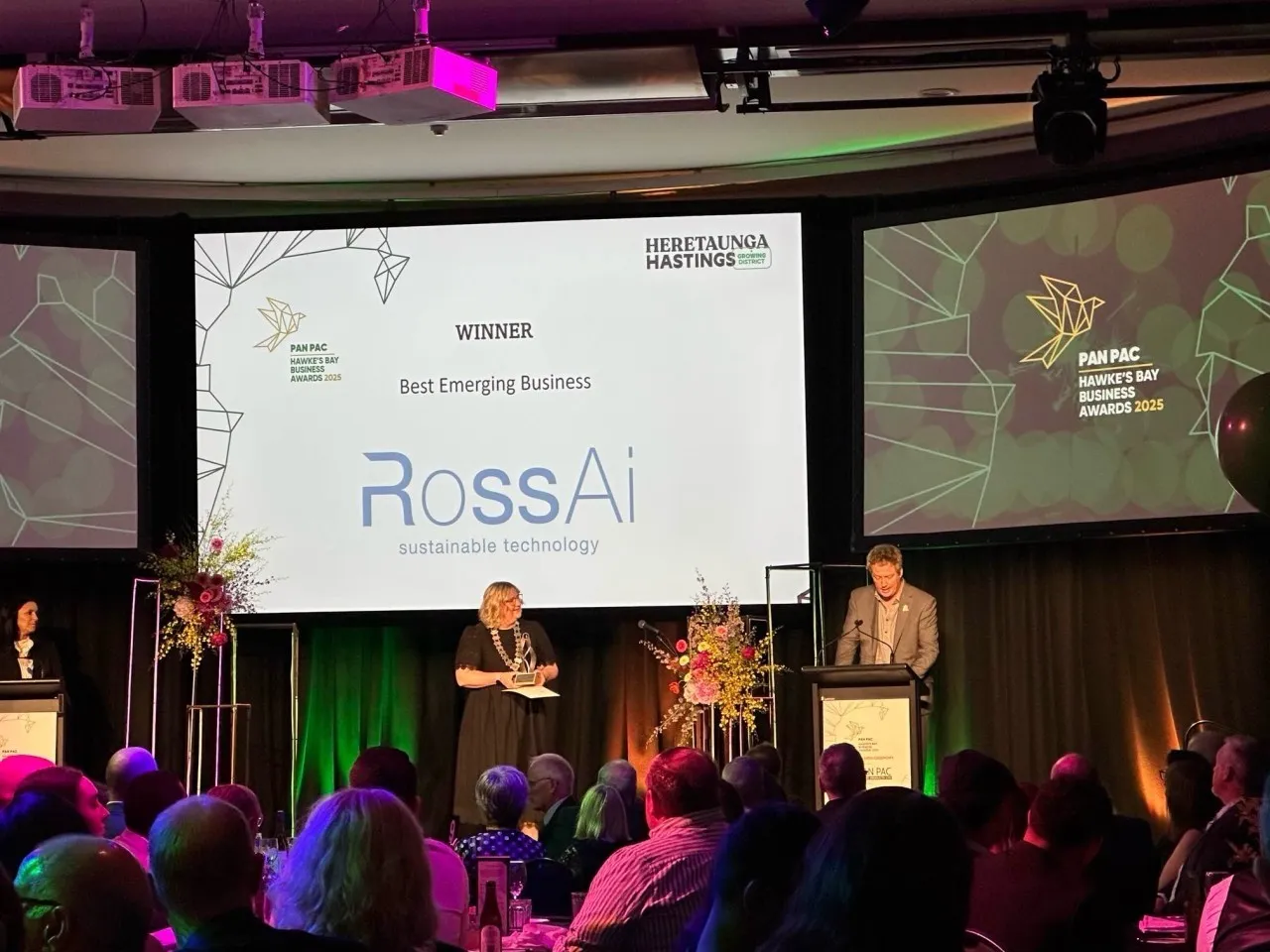
RossAi is a deep‑tech AI company founded with a bold vision to transform how people interact with technology — and to bridge the gap between complex data and meaningful outcomes. Based in Hawke’s Bay, New Zealand, we build real‑world AI systems that help organisations make smarter, faster, and more sustainable decisions.
Our journey began with a simple idea: technology should serve people and the environment, not complicate them. From those roots, RossAi grew into a team committed to practical innovation, enduring value, and operational intelligence.
Founded in 2019 in a small garage in Hawke’s Bay, we started developing a robot that was environmentally friendly using locally sourced natural timber. We decided it was time to develop new technology that included the natural environment.
With that and a lot of time in the garage, RossAi was born. Our technology is evolving rapidly using AI technology and transforming that into knowledge sharing.
“We wanted to create something amazing, a solution outside the box using wood”
To design and deploy practical Al and sensor technologies that help industry make better decisions, reduce environmental impact, and operate more efficiently-without adding complexity or waste.
RossAl exists to bridge the gap between advanced technology and real-world use. We turn complex data into clear, actionable insight so organisations can:
Our work is grounded in solving real problems faced by growers, councils, and industry-particularly in regions like Hawke's Bay where productivity, water, land, and community outcomes are deeply connected.
We are guided by a set of core principles — our kaupapa — that shape every decision we make:
We build technology that works with communities, not over them-supporting regional economies, local manufacturing, and long-term stewardship of land and water.
RossAl focuses on deployable, field-ready solutions. Our Al, sensors, and hardware are designed to be robust, explainable, and useful in real operating environments.
We enable better guardianship of natural resources through measurement, transparency, and smarter decision-making-reducing waste, emissions, and unintended environmental harm.
From design and engineering to deployment and support, we take responsibility for the full lifecycle of our technology, including sustainable materials and circular design where possible.
We prioritise outcomes that deliver enduring economic, environmental, and social value-aligning with a triple-bottom-line approach: people, place, and profit.